
Wall insulation
Insulating your walls alongside the crawl space seals the full lower thermal envelope of your home for more consistent indoor temperatures.
Learn more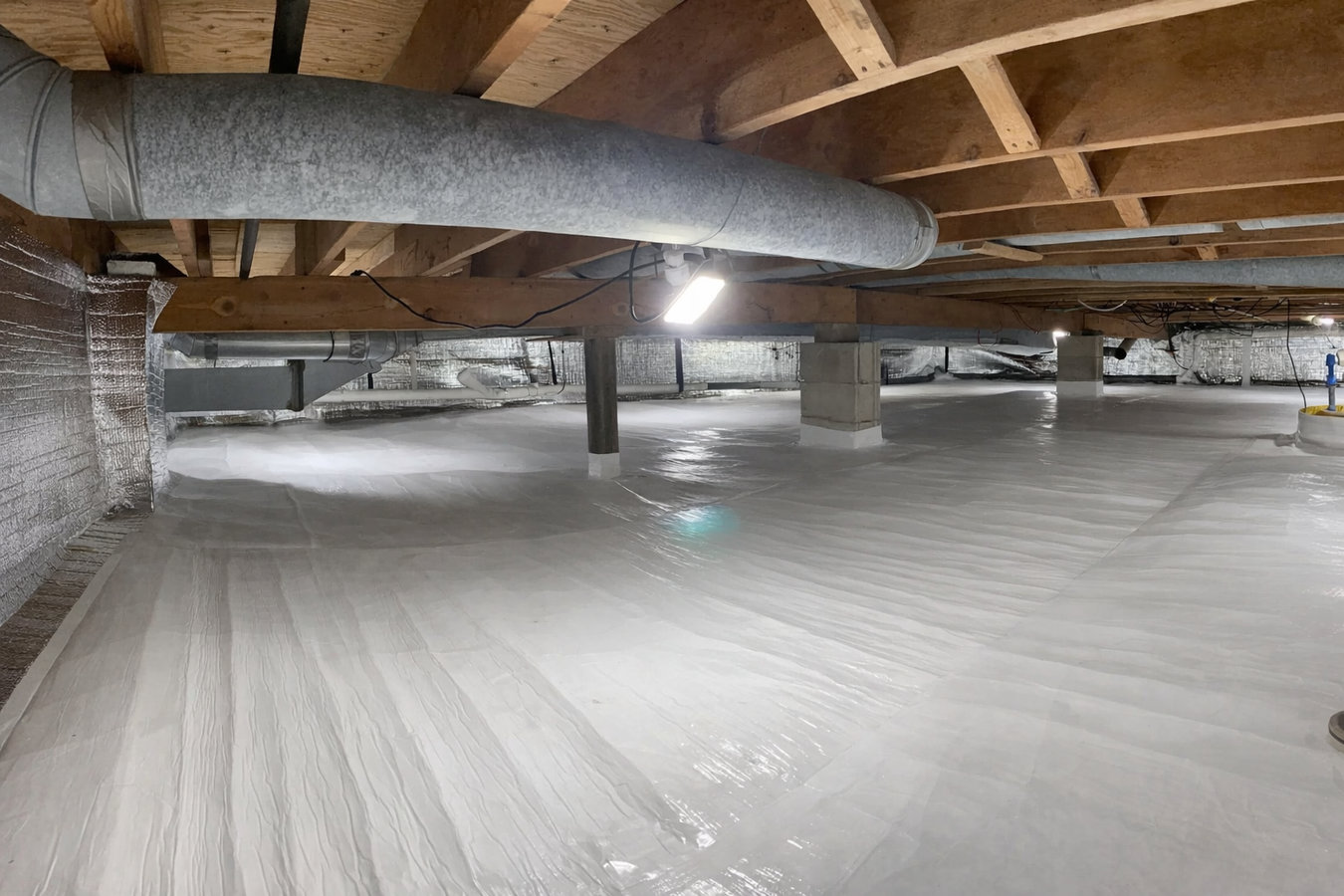
Cold floors, high energy bills, and musty odors often trace back to the same place - an uninsulated or failing crawl space. We fix it properly so your home stays comfortable and dry, season after season.
Crawl space insulation in Florence acts as a thermal barrier between the ground beneath your home and the living floors above it, reducing energy loss and blocking moisture - most jobs are completed in a single day, and you can stay in your home throughout.
Florence's clay-heavy soils hold moisture close to the surface long after rain, and summer humidity in the Tennessee Valley regularly pushes above 80 percent. That combination makes crawl spaces here more vulnerable to moisture damage than in drier climates - which is why insulation alone is not always enough. A proper job addresses the moisture source at the same time.
Many Florence homes built in the 1950s through 1980s were constructed with little or no crawl space insulation. If yours is one of them, the problems you notice - cold floors, higher bills, musty smells - are predictable consequences. Pairing good crawl space insulation with a crawl space vapor barrier addresses both the thermal and moisture sides of the problem at once.
Ready to find out what your crawl space actually needs? Call us for a free on-site look.
These are the warning signs Florence homeowners most commonly describe before they call.
If your kitchen or living room floor feels cold through your socks on a January morning, heat is escaping through the floor. Florence winters are mild enough that this should not happen in a well-insulated home - when it does, crawl space insulation is likely missing, thin, or has sagged away from the floor joists.
An earthy or musty odor drifting up from your floors or through your vents usually means moisture has built up in the crawl space below. Florence's humid summers make this especially common in older homes. That smell typically indicates mold or mildew growing on wood or degraded insulation - and it will not go away without addressing what is happening underneath.
If your energy bills feel out of proportion to your home's square footage, a poorly insulated crawl space could be a major reason. Florence homes with ductwork running through the crawl space are especially vulnerable - conditioned air leaks out before it reaches your rooms and your system runs longer to compensate.
If you peek into your crawl space through the access hatch and see insulation hanging down, covered in dark spots, or missing in sections, it needs to be replaced. Fiberglass batts that have absorbed moisture lose their shape and their ability to slow heat transfer. What you see visually is a reliable indicator of what is happening thermally.
Not sure what you are dealing with? Tell us what you are noticing and we will help you figure it out.
The right approach for your crawl space depends on your home's layout, moisture situation, and whether you have ductwork running below the floor. For many Florence homes - especially those built before the 1980s with no existing vapor barrier - floor joist insulation combined with a crawl space vapor barrier is the most effective starting point. It stops heat loss through the floor and cuts off the ground as a moisture source at the same time.
For homes with HVAC ductwork running through the crawl space, encapsulation often makes more sense - it brings the space closer to indoor conditions and dramatically reduces the conditioned air lost through leaky ducts. We also handle wall insulation upgrades for homeowners who want to address the full thermal envelope of their home in one project. Whatever the method, the job is not done until moisture is accounted for - skipping that step is how crawl space insulation fails within a few years in this climate.
The traditional approach - insulation fills between floor joists and works well in homes with dry, vented crawl spaces and no ductwork below.
Best for Florence homes with ductwork in the crawl space or persistent moisture issues - seals the walls and floor to bring the space closer to indoor conditions.
A thick plastic sheet across the ground that stops ground moisture from migrating up into insulation, framing, and ductwork.
Spray foam or cut-and-cobble rigid foam seals the rim board - one of the most overlooked air and heat leak points in any crawl space.
The soils in and around Florence contain a significant amount of clay, which does not drain quickly after rain. That means the ground beneath your crawl space stays damp longer after wet weather, and that moisture has nowhere to go except up. Combine that with summers where outdoor humidity regularly climbs above 80 percent and you have conditions that are genuinely hard on any crawl space material that is not properly sealed. Homeowners near Tuscumbia and across the older Florence neighborhoods deal with the same challenge - it is not a matter of if moisture will find its way under your home, but how well you have prepared for it.
Florence winters are mild compared to northern states, but temperatures do drop into the 20s and 30s overnight from December through February. Without insulation beneath the floor, those cold nights translate directly into cold floors in your kitchen and living areas. Many homeowners describe this as one of the most noticeable improvements after installation - floors that used to feel cold in the morning simply do not anymore. Homes in Muscle Shoals and across Lauderdale County built in the postwar era are particularly likely to benefit because they were simply not built with today's insulation expectations in mind. The U.S. Department of Energy notes that insulating and air sealing crawl spaces can meaningfully reduce home energy costs when done correctly.
Here is the process from first call to finished job - no guessing required.
We ask a few questions about your home's age, whether you have noticed moisture or cold floors, and whether ductwork runs through your crawl space. We get back to you within one business day to confirm an inspection time.
A crew member goes into the crawl space and looks at moisture levels, the condition of any existing insulation, the ground, vents, and framing. After the inspection, we walk you through what we found before quoting anything.
The crew works in the crawl space below your floor and does not need access to your living areas. Most standard Florence-area homes are completed in a single day. The method - batts, spray foam, vapor barrier, or a combination - is determined by what we found during the inspection.
We show you photos from inside the crawl space or walk you to the access hatch so you can see the finished work. We point out anything worth keeping an eye on, remove all debris, and leave the site clean.
Free on-site estimate. We assess moisture, existing conditions, and ductwork before recommending anything. No pressure.
(256) 367-9903We have worked in crawl spaces across Lauderdale County and understand the local conditions - clay soil that stays wet, homes built before modern insulation standards, and HVAC ductwork that runs below the floor in many Florence homes. That context shapes how we approach each job.
We document each crawl space project from start to finish and coordinate permits when a job calls for one, so you always have a clear record of what was done and why.
We do not install insulation over an active moisture problem. Every crawl space inspection includes a moisture assessment because in Florence's climate, skipping that step is why crawl space insulation fails within a few years. What goes in should still be working a decade from now.
Crawl spaces vary too much to quote accurately over the phone. We come to your home, look at what is actually there, and give you a clear number before you commit to anything. No pressure, no upsell.
Before hiring anyone for crawl space work, ask how they handle moisture and permit coordination. The Insulation Contractors Association of America publishes best practices for crawl space work that reputable contractors follow.
Insulating your walls alongside the crawl space seals the full lower thermal envelope of your home for more consistent indoor temperatures.
Learn moreA heavy-duty plastic barrier across the crawl space floor stops ground moisture from reaching your insulation, framing, and ductwork.
Learn moreFlorence summers do not wait - getting your crawl space sealed before the next round of humidity protects your floors, your ductwork, and your energy bills. Call us or request a free estimate now.